Table Of Content

There is an inverse relationship between the internal diameter of a duct and the duct velocity. This means that the air velocity will expand as the duct diameter reduces. Calculate air velocity flowing through ducts easily using our free Air Duct Velocity Calculator.
Determine Your Materials List
Properly sized ducts ensure optimal air distribution, maintaining comfortable temperature levels, and improving indoor air quality. For example, in large office buildings, incorrect duct sizing could lead to insufficient airflow to certain areas, leading to discomfort for occupants and increased energy costs. Another important unit to know is the friction loss rate of your ducts.
Friction Rate Calculator
So, follow the below step-by-step process and I hope you will be able to design HVAC ductwork successfully. As you can see, designing HVAC ductwork is a lengthy process, especially if you have little to no knowledge about it. In the ServiceTitan Ductulator, select the type and shape of duct you plan to use to get the correct corresponding measurements in the duct size chart. To calculate the duct CFM for each room, you must first perform an HVAC load calculation for the whole house and for each room, using the Manual J method. So, if a room measures 10-by-10 feet, the total area equals 100 square feet.
Duct Size Calculator
Then they multiply it by 100 and divide by the total length of your system’s ductwork. TEL takes into account the pressure drops that will happen from splits, turns, and other fittings in the HVAC ductwork plan. Each fitting has an effective length that equates its pressure drop to an equivalent amount of straight duct. The Total External Static Pressure (TESP) gets measured in inches of water column (wc or iws).
The extreme high cooling capacity thermoelectric cooler optimal design for kilowatts scale thermoelectric air ... - ScienceDirect.com
The extreme high cooling capacity thermoelectric cooler optimal design for kilowatts scale thermoelectric air ....
Posted: Fri, 01 Dec 2023 08:00:00 GMT [source]
For example use long radius bends rather than right angles as the sudden change in direction wastes a huge amount of energy. Most of the time, central air conditioners in homes require ducted returns. By guiding the height of the main duct, your ceiling height can be higher. Although square-shaped ducts are cheaper, they occupy more ceiling space and low ceiling height will make your home feel dark and cramped.
Convert Diameter to Rectangular Equivalent
We already know all these values so if we drop the figures in we get an answer of 0.718 pascals. (Watch the video at the bottom of the page to see how to calculate that). The high velocity in the main duct which is caused by the sharp turns and sudden bends, reduces the flow into the 3 branches on the left. SimScale is not just limited to ductwork design, it’s also used for data centers, AEC applications, electronics design, as well as thermal and structural analysis. The third thing we have to consider is the dynamic losses caused by the fittings. We want to use the smoothest fittings possible for energy efficiency.
Can Round Flexible Duct Be Used for HVAC Return Air?
With many simple HVAC calculators already available, I choose to emphasize accuracy and customization over simplicity. If you want to promote your products or services in the Engineering ToolBox - please use Google Adwords. You can target the Engineering ToolBox by using AdWords Managed Placements.
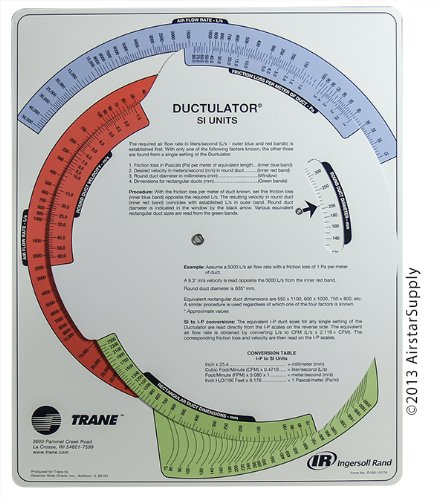
Your overall ducting size comes from combining the size, CFM, and friction loss of your home—meaning it ends up being a pretty complicated calculation. Because of this, HVAC professionals and amateurs alike typically don’t calculate the final HVAC ducting size by themselves. Instead, they use software or programmed calculators that can make these final deductions for them. Each type of ductwork creates friction loss as the air moves through it. Flat sheet metal ductwork is the smoothest – causes the least friction loss. Flex duct creates the most friction loss, and importantly, when it isn’t stretched tight, it might create an unacceptable amount of friction.
If projected velocity seems too high for the system, select the next-largest duct size. We’re going to recommend the same thing here – that you leave the maximum velocity in FPM (feet per minute) at 1500. Higher velocity would create a volume of air flow that would cause “windy” noises in your ductwork and vents and will damage them over time. If a given duct diameter produces a velocity above 1500 FPM, then using ductwork with larger diameter is another way to offset it. The software simplifies calculations for flow rate, velocity, pressure, pump duty, plant size, and recirculation systems, freeing you from tedious math and enabling you to concentrate on project design. This article aims to provide a clear, concise, and technical walkthrough of air velocity calculations, ensuring you have the knowledge needed for optimal ductwork design.
Moreover, it employs industry-standard (such as ASHRAE) formulas to provide accurate results. Can save money by reducing the number of time spent on manual and long calculations, and avoiding costly mistakes. Saves time by providing quick and easy calculations, putting an end to performing complex mathematical calcs manually.
The downward diagonal lines are for velocity, the upward diagonal lines are for duct diameter. That’s why HVAC professionals have charts and tools at their disposal to make the whole process go smoother. Generally, duct design starts with identifying the airflow needed in each room. Then, we need to size and place the supply diffuser and return grille.
You also must determine which size of HVAC equipment will work best to meet the energy demands for the space, based on your whole-home or whole-office HVAC load calculations. Maximum Velocity – The air flow speed the ductwork can safely handle without causing too much pressure, excessive noise or potential air loss and waste. Total Effective Length – Our calculator factors this automatically based on standard TELs.
Ductwork is an essential part of your HVAC system that affects its performance, efficiency, comfort, and air quality. By following these steps, you can design your duct system to meet your needs and preferences. Always check your local codes before starting any construction project. Users can input the dimensions of their specific duct shape to obtain accurate velocity calculations.


No comments:
Post a Comment